E-STEM action project · Bangladesh

Save the Aquifer

A student-led exploration of smarter ways to collect freshwater—so communities can rely less on vulnerable groundwater.

Freshwater solutions for a changing climate
FIELD STUDY / 0123°32′36″N · 89°10′35″E
SUNLIGHTCONDENSATIONCOLLECTIONRAW WATER
HYBRID SOLAR DISTILLERPASSIVE HEAT + PV ASSIST
01 COLLECT02 STORE03 TESTUse available water. Protect what lies below.
01 / The challenge

Safe water shouldn't be a daily struggle

In coastal Khulna and nearby communities, the water beneath the ground is under increasing pressure—and safe alternatives can be hard to reach.

What communities face

Heavy dependence on groundwater can contribute to declining water tables. Coastal salinity intrusion and naturally occurring iron or arsenic can affect water quality. For many low-income households, travelling farther or paying more for safe water adds a disproportionate burden. Irregular rainfall and a changing climate make dependable sources even less certain, while rain, fog and other available water often go unused.

02 / Our solution

Four Pathways to Freshwater

Save the Aquifer brings together four complementary approaches to freshwater collection and purification, adapting to seasonal changes and local conditions to reduce dependence on groundwater and support a more water-secure future.

☀

Solar distillation

Sunlight evaporates water; vapour condenses on a cooler surface, leaving many salts and non-volatile contaminants behind.

〰

Fog harvesting

A fine mesh can catch tiny fog droplets and guide them to a collection point with minimal energy.

▤

Rainwater harvesting

Roof or surface catchments channel rainfall into covered tanks for storage and later use.

◉

Backup filtration

Reverse osmosis may supplement collection systems where appropriate. All treated water still needs suitable quality testing.

Important: distillation can remove many dissolved and non-volatile contaminants, but no design guarantees potable water in every condition. Test the collected water using appropriate methods before drinking.
03 / The hybrid distiller

Sunlight in
Freshwater out

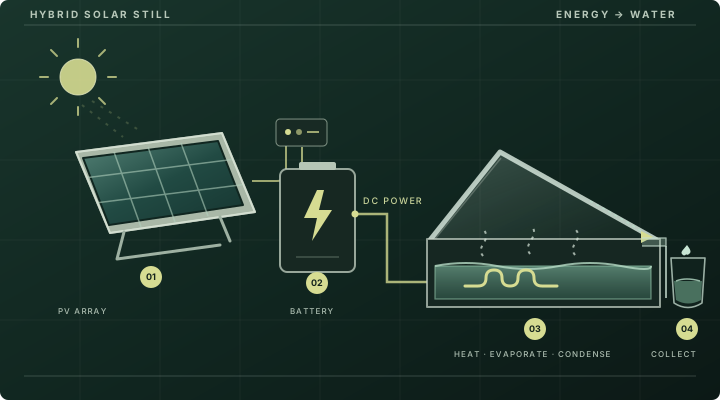
The prototype combines passive solar heating with a solar panel, battery and electric heating rod to support evaporation when sunlight is weak.

Hybrid solar distiller diagram showing a photovoltaic panel powering a battery and heating rod, with vapour condensing on sloped glass and flowing into a clean-water container
01

Solar heating

Sunlight passes through sloped transparent glass and warms water held in a dark basin.

02

Solar panel energy

A photovoltaic panel converts sunlight into electricity for the heating rod and system components.

03

Heating rod for added output

An electric heating rod raises the water temperature to encourage faster evaporation and potentially greater yield.

04

Battery storage

A rechargeable battery stores solar electricity and can help operate components during weaker sunlight.

05

Evaporation and condensation

Water vapour rises, leaving many dissolved salts and non-volatile contaminants in the basin, then condenses on the cooler inner glass.

06

Freshwater collection

Droplets run down the sloped glass into a collection channel and a clean storage container.

07

Dual-power operation

Passive solar heat, PV electricity, battery storage and electrical backup work together. Always test the water before drinking.

04 / Local conditions

Jhenaidah, right now

Current conditions and a 7-day forecast for Jhenaidah, followed by a model-based river-flow and rainfall outlook.

LIVE WEATHER
Jhenaidah, Bangladesh · 23.54°N, 89.15°E
--°
Loading conditions…
☁
Feels like--°
Humidity--%
Wind-- km/h
Rain now-- mm
Loading…
MODEL-BASED OUTLOOK

Flood possibility

Rainfall + modelled river-flow indicators
Checking outlook…

This is an indicative estimate from forecast rainfall and the nearest modelled river-flow grid—not an official flood warning or a precise local flood probability.

-- mmforecast rain · next 3 days
-- m³/smodelled flow · today
-- m³/sensemble peak · 7 days
Weather: Open-Meteo Forecast API. River flow: Open-Meteo Flood API (GloFAS), daily discharge. The 3-day rainfall signal uses transparent screening bands: under 20 mm = lower, 20–49 mm = watch, 50 mm or more = elevated; these are not calibrated flood probabilities. GloFAS selects a nearby river grid (~5 km); it may not represent Jhenaidah's local drainage, embankments or the nearest relevant river. Follow official Bangladesh advisories.
05 / The people behind it

Different strengths, one shared purpose

A student team bringing together leadership, hands-on making, research, electronics, design and communication.

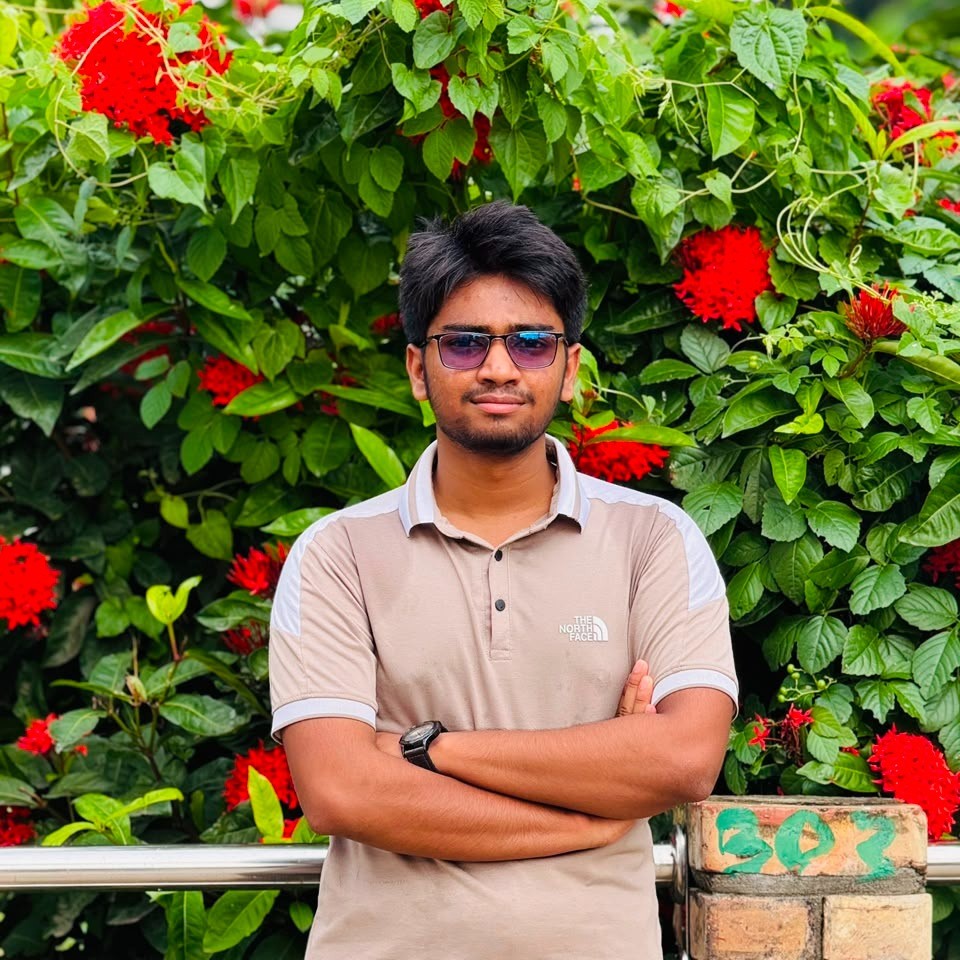
Babul HossenMENTOR

Babul Hossen

Mentor — guided the team's project development and shared advice throughout the process.

Jubair AhmedTEAM LEADER

Jubair Ahmed

Team leader & project management — coordinated the workflow, reviewed contributions and brought the project together.

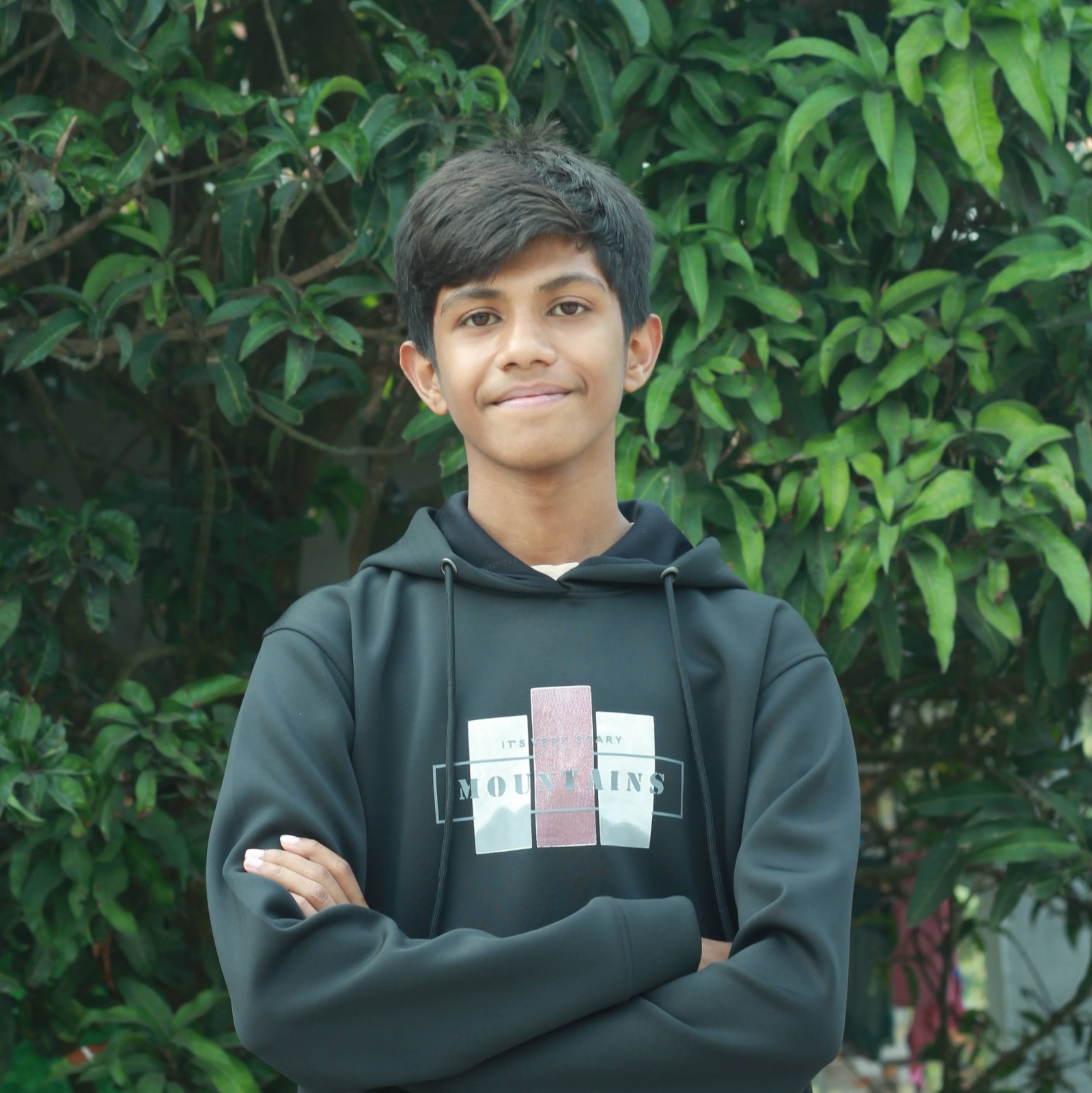
Zayan ZakirWEBSITE DEVELOPMENT

MD Zayan Zakir

Designed and developed the project website to present the problem, proposed solution, project details and team contributions clearly.

ZeemSTRATEGIC ADVISOR

Sadman Sakib Zeem

Provided valuable insights, strategic guidance, and thoughtful suggestions that helped shape the project and guide the team throughout its development.

Riad FaisalELECTRONICS

Riad Faisal

Electronics & technical implementation — contributed to the system's electronics and technical setup.

Md Tanjibur RahmanTECHNICAL IMPLEMENTATION

Md Tanjibur Rahman

Electronics & technical implementation — helped develop the project's technical setup and system.

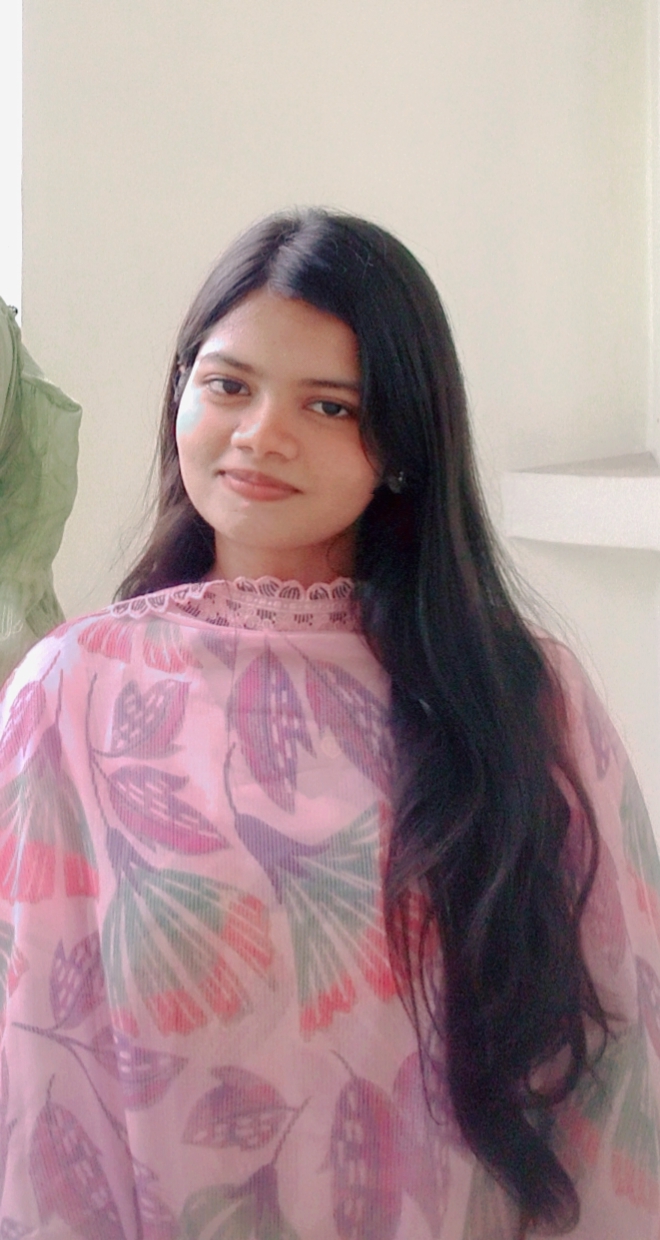
Halimatus SadiaDESIGN & PROTOTYPE

Halimatus Sadia

Design & prototype development — led the hands-on design and development of the physical model.

Nazmus Sajid RaadRESEARCH & DOCUMENTATION

Nazmus Sajid Raad

Research, documentation & content — researched the issue, collected information and contributed to project writing.

06 / Project support

Built with a community behind it

The project is supported by organizations helping students turn environmental ideas into practical action.

BYEI
PROJECT SUPPORTER · AWARD PROVIDER

Bangladesh Youth Environmental Initiative

Supports the project through the NEO 2026 E-STEM Action Project Award, helping turn ideas into practical solutions for environmental challenges.

MEGA
COMMUNITY & AWARENESS

Make Earth Green Again

Supports environmental awareness and community engagement.

RE·BOT
TECHNICAL SUPPORT

Re-Bot

Contributes to the project's technical development and practical implementation.